
Why Water Heater Maintenance Matters in West Texas
Water heater flushing lubbock tx is an essential maintenance task that removes sediment buildup from your tank, improving efficiency and extending the life of your unit. Here’s what you need to know:
- How often: At least once per year (twice yearly for Lubbock’s hard water)
- Why it matters: Prevents sediment buildup, improves efficiency, extends lifespan
- Key signs you need flushing: Popping noises, lukewarm water, discolored water
- DIY or pro: Homeowners can flush their own tanks, but professional service includes safety inspections and anode rod checks
If you’ve ever experienced a cold shower on a chilly Lubbock morning, you know how essential a reliable water heater is to your daily comfort. The water coming into your home contains minerals that settle at the bottom of your tank over time. In Lubbock’s hard water conditions, this sediment buildup happens faster than in many other areas, which means your water heater works harder and wears out sooner without regular maintenance. Flushing removes this buildup before it causes damage, reduces efficiency, or leads to a premature breakdown.
I’m Ronda Rushing Brown, and through decades of working in our family’s plumbing and HVAC business, I’ve seen how proper maintenance like water heater flushing lubbock tx residents need can prevent costly emergency repairs and extend equipment life by years. Whether you’re a longtime homeowner or new to the area, understanding this simple maintenance task will save you money and headaches down the road.
Why Flushing Your Water Heater is Crucial in Lubbock
Most Lubbock homeowners don’t think about their water heater until something goes wrong. But a silent problem is building up inside the tank: sediment.
West Texas water contains minerals like calcium and magnesium. When heated, these minerals separate and sink to the bottom of your tank, forming a layer of sediment. In Lubbock’s hard water, this buildup happens faster than elsewhere, making regular water heater flushing lubbock tx essential. This sediment layer acts as an insulating blanket between the heating element and the water, forcing your unit to work harder. This extra effort increases energy bills, puts stress on the appliance, and can cause mineral deposits to calcify into a stubborn, concrete-like layer.
Beyond higher utility costs, this hardened sediment can cause tank corrosion. Once corrosion creates leaks, you face potential water damage and a costly replacement. Flushing out sediment regularly keeps your tank clean, your water heater efficient, and your system running smoothly for years to come.
Signs Your Water Heater Needs Flushing
Your water heater gives warning signs when it needs help. Recognizing them helps you address problems before they become expensive emergencies.
The most common clue is popping or rumbling noises from the tank. This sound is caused by water trapped under the sediment layer boiling and creating steam bubbles that “pop” as they escape. It’s a clear sign your water heater is struggling.
Another telltale sign is lukewarm water. If your showers are less warm or your dishwasher isn’t cleaning well, sediment may be blocking efficient heat transfer. A reduced hot water supply also occurs because sediment takes up space in the tank.
Discolored or rusty water from your hot water tap often points to tank corrosion, which is worsened by sediment. This can also indicate your anode rod needs attention. Less commonly, strange odors like a metallic smell can signal internal mineral-related problems.
If you have a complete loss of hot water, see our guide on No Hot Water Lubbock TX for more troubleshooting.
Risks of Neglecting Maintenance
Putting off water heater flushing lubbock tx might seem minor, but problems can snowball, leading to serious damage.
Decreased efficiency is the first consequence. The sediment barrier forces longer heating cycles, causing higher utility costs. A well-maintained unit can reduce water heating costs by up to 7%, but neglecting it wastes energy and money.
For electric units, sediment can bury and burn out heating elements, leading to damage to heating elements. Gas water heaters face similar issues with overworked burners.
The most serious risk is tank corrosion and leaks. Sediment creates stress points in the tank lining that can crack and corrode, leading to leaks. A leaking tank requires a full replacement and can cause significant water damage. This all leads to a shorter water heater lifespan. Regular maintenance helps a unit last 8 to 12 years; skipping it can cut that time in half. Hardened mineral deposits can also block drain valves and cause other issues requiring costly Plumbing Repairs.
If you haven’t flushed your water heater in a while, significant sediment has likely built up. We recommend flushing at least once a year—or twice for Lubbock’s hard water. This preventive maintenance saves you from major headaches and expenses.
A Step-by-Step Guide to Water Heater Flushing in Lubbock, TX
Flushing your water heater is a manageable DIY task for many homeowners. With proper preparation, you can tackle water heater flushing lubbock tx as part of your home maintenance. However, safety is paramount. If you feel uncertain at any point, it’s best to call for professional help. The process is similar for gas and electric models, differing mainly in how you turn off the power. For additional visual guidance, you can check resources like How to Flush a Water Heater. Let’s walk through the steps.
Gather Your Tools and Materials
Gathering your tools beforehand sets you up for success. You’ll need a garden hose long enough to reach a floor drain, utility sink, or the outdoors. A bucket is useful for inspecting sediment. You’ll also want channel-lock pliers or a wrench for a stubborn drain valve, a screwdriver (depending on the valve), protective gloves, and a towel for drips. Pro tip: A straining screen on the hose end can prevent drain clogs when draining indoors.
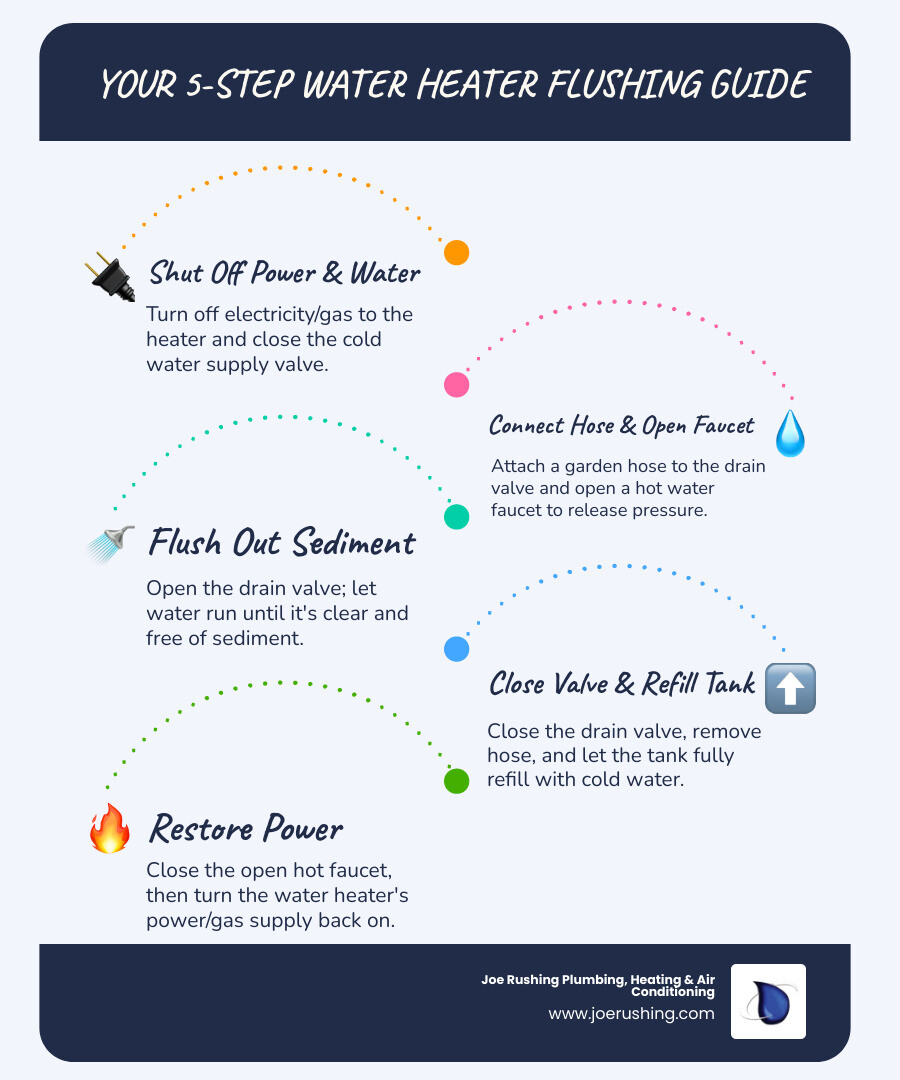
The Flushing Process: A DIY Guide for water heater flushing lubbock tx
Plan to do this when you won’t need hot water for a few hours.
Turn off the power first—this is critical for safety. For an electric model, flip the circuit breaker to “OFF.” For a gas model, turn the gas control valve to “OFF” or “PILOT.” Important: Let the water cool for at least one to two hours, depending on tank size, to prevent scalding and protect the heating elements.
Next, turn off the water supply using the cold-water inlet valve at the top of the tank. Then, open a hot water faucet somewhere in your house to allow air into the system and prevent a vacuum during draining.
Now, connect your garden hose to the drain valve at the bottom of the tank. Ensure it’s secure, then route the other end to a floor drain, bucket, or outside.
Carefully open the drain valve. The initial water will likely be cloudy with sediment; this is normal. Let it flush until the water runs clear. If flow stops, a sediment chunk may be blocking the valve. Briefly open the cold-water supply to create a surge and dislodge it.
Once the water is clear, close the drain valve and disconnect the hose. To refill the tank, first close the hot water faucets you opened. Then, slowly open the cold-water inlet valve. When the tank is full, open a hot water faucet again to purge air from the lines until you get a steady stream.
Finally, restore the power by turning the circuit breaker on or setting the gas valve to “ON.” Your water heater will begin reheating the water. Expect hot water in about 20-30 minutes for gas heaters or 60-90 minutes for electric units.
Special Considerations for Tankless Water Heaters
Tankless water heaters provide endless hot water but have different maintenance needs. Instead of sediment settling in a tank, scale builds up on the internal heat exchanger, a particular challenge in Lubbock’s hard water environment.
This mineral accumulation impacts efficiency, restricts water flow, and can damage the unit. The maintenance process, called descaling, is more involved than flushing a tank. It requires a specialized acidic descaling solution, a circulation pump, and hoses to circulate the solution through the heat exchanger in a closed loop.
Due to the complexity, chemicals, and risk of damage, we strongly recommend professional service for tankless water heater maintenance. Our team has the specialized tools to safely descale your unit, preserving its efficiency and helping it reach its full lifespan of 20+ years. With Lubbock’s hard water, professional descaling is crucial for peak performance. For comprehensive Plumbing Services that include tankless maintenance, we’re here to help.
DIY vs. Professional Flushing: When to Call for Help
The decision to DIY water heater flushing lubbock tx or call a professional depends on your comfort level and the state of your unit. For newer water heaters, DIY flushing is often manageable and empowering. We’ve provided the steps, and if your drain valve opens easily, you can likely handle the task.
However, knowing your limits is crucial for safety. If your drain valve is stuck or leaking, forcing it can create an emergency. Old, corroded valves can break off, causing a much bigger problem. A trickle of water instead of a steady flow indicates severe sediment blockage that requires professional equipment to clear without damaging the tank. If you see suspected leaks or damage, stop and call us. A minor drip could signal a serious issue. Finally, if you’re simply not comfortable with the process, it’s always better to call for help than risk an accident.
Key benefits of professional water heater flushing lubbock tx
When you schedule professional water heater flushing lubbock tx service, you get more than a clean tank. We provide thorough cleaning and descaling to remove stubborn deposits. For tankless units, we perform a complete descaling process with specialized equipment that’s difficult to replicate at home.
A valuable part of our service is the anode rod inspection. This rod protects your tank from corrosion, and we check its condition during every flush, advising if a replacement is needed (typically around the five-year mark). This can add years to your water heater’s life.
We also perform a pressure relief valve test to ensure this critical safety component is working. Our full system safety check includes inspecting all connections, burners or heating elements, and the unit’s overall condition for any signs of leaks or wear.
This early detection of potential problems is where professional service truly pays off. Our technicians can spot warning signs most homeowners would miss, catching small issues before they become emergencies that require costly Plumbing Repair Lubbock TX. A small investment in professional maintenance can save you from a major replacement and the headache of water damage.
Frequently Asked Questions about Water Heater Flushing
We hear many questions from homeowners in Lubbock and Levelland about water heater maintenance. Here are some of the most common concerns we address, along with honest answers based on our decades of experience serving West Texas families.
How often should I flush my water heater in Lubbock?
For most homes across the country, flushing your water heater once a year is the standard recommendation. But here’s the thing about living in West Texas: our water is different. Lubbock’s particularly hard water means minerals accumulate faster inside your tank, which is why we typically recommend flushing every six months for our local homeowners.
Think of it this way—the higher mineral content in our local water supply is like having double the sediment working its way into your tank compared to areas with softer water. By flushing twice yearly, you’re staying ahead of the buildup rather than playing catch-up. This proactive approach prevents mineral deposits from hardening into that concrete-like layer that’s incredibly difficult to remove later.
Of course, unless your operator’s manual suggests something different, once a year is a solid baseline. But if you want to truly extend your water heater’s lifespan and maintain peak efficiency in Lubbock’s challenging water conditions, that twice-yearly schedule makes a real difference. Regular water heater flushing lubbock tx residents schedule keeps units running smoothly and saves money on energy bills over time.
Is the popping noise from my water heater dangerous?
That popping, rumbling, or even banging sound coming from your water heater can be unsettling, especially if you hear it late at night. The good news? It’s typically not an immediate safety hazard. The less-good news? It’s definitely your water heater trying to tell you something important.
What you’re hearing is water trapped beneath a layer of sediment at the bottom of your tank. As the heating element warms up, this trapped water boils and creates steam bubbles that forcefully escape through the sediment layer—that’s the “pop” you’re hearing. It’s similar to how popcorn kernels burst, except it’s happening inside your water heater.
While this noise itself won’t cause your water heater to explode or create an immediate danger, it signals that your unit is working much harder than it should be. This extra strain reduces energy efficiency, meaning you’re paying more on your utility bills. More concerning, the constant stress on the tank walls from this process accelerates corrosion and can eventually lead to leaks and premature failure.
So while you don’t need to panic when you hear these noises, you definitely shouldn’t ignore them either. It’s a clear sign that flushing is needed to prevent long-term damage and avoid those costly repairs down the road. Think of it as your water heater’s way of asking for help before things get serious.
What are the main benefits of regular flushing?
When homeowners ask us whether regular water heater flushing lubbock tx maintenance is really worth the effort, we always point to the tangible benefits that directly impact their daily comfort and household budget.
Improved energy efficiency sits at the top of the list. When sediment isn’t insulating your heating element or gas burner, your water heater can heat water directly and efficiently. This means it uses less energy to do the same job, which translates immediately to lower utility bills each month. Over a year, these savings can really add up.
You’ll also notice more consistent and hotter water throughout your home. No more lukewarm showers or running out of hot water halfway through washing dishes. With sediment removed, your water heater operates at its peak capacity, delivering reliable hot water when you need it.
Perhaps most importantly, regular flushing dramatically extends your water heater’s lifespan. While a neglected unit might give out after just five or six years, a properly maintained water heater can reliably serve your family for 10 to 12 years or even longer. That’s years of postponing a major replacement expense.
Finally, by preventing the internal corrosion and damage that sediment causes, you’re also preventing leaks and costly repairs. A leaking water heater doesn’t just mean you need a new unit—it can cause significant water damage to your home, leading to repairs that cost far more than routine maintenance ever would. Flushing out the lime and other sediments keeps your tank healthy, your water hot, and your wallet happy.
Protect Your Investment with Regular Maintenance
Think of your water heater as a silent partner in your daily life—one that deserves a little appreciation and care. From that first morning shower to the evening dishes, it’s there for you, day in and day out. In Lubbock and across West Texas, where our hard water puts extra strain on these hardworking appliances, regular water heater flushing lubbock tx isn’t just smart—keeping your home comfortable and your wallet happy.
We’ve walked through the why, the when, and the how of water heater maintenance together. You now know the warning signs to watch for, the risks of putting it off, and even how to tackle the job yourself if you’re up for it. But here’s the thing: whether you choose to make this an annual DIY project or prefer to have experienced professionals handle it, what matters most is that it gets done. Your water heater will thank you with years of reliable service, and you’ll thank yourself when you see those lower utility bills.
At Joe Rushing Plumbing, Heating & Air Conditioning, we’ve been serving families in Lubbock and Levelland for generations. We understand West Texas homes because we live here too. We know the challenges our hard water presents, and we’ve seen how proactive maintenance saves homeowners from costly surprises down the road. For expert help and a comprehensive inspection that goes beyond just flushing—including checking your anode rod, testing your pressure relief valve, and catching small issues before they become big problems—the professionals at Joe Rushing Plumbing are ready to assist with all your plumbing needs.
After all, we’re your neighbors, and we’re committed to ensuring your hot water never turns into an unexpected West Texas polar bear plunge! Let’s keep your home running smoothly together.