
Why a Healthy Exhaust System Matters for Lubbock Drivers
Finding the best exhaust pipe in lubbock, tx doesn’t have to be complicated. Understanding how a healthy exhaust system protects your family and your vehicle can also help you appreciate why safe venting and exhaust are so important inside your home.
When your car starts making strange noises—a loud rumble, rattling, or hissing—your exhaust system is trying to tell you something. A healthy exhaust system does more than just muffle sound. It protects you from dangerous carbon monoxide fumes, keeps your engine running efficiently, and helps your vehicle pass emissions tests. Ignoring exhaust problems can lead to reduced fuel economy, engine damage, and even serious health risks. Whether you’re dealing with a rusted pipe, a failing catalytic converter, or a dragging muffler, finding skilled help in Lubbock who understands the warning signs and the importance of proper venting is essential for your safety and your wallet.
For comprehensive heating and cooling solutions for your home, explore our HVAC services, and when you need expert care, schedule your service appointment today.
I’m Ronda Rushing Brown, and while my family’s business focuses on HVAC and plumbing systems, I understand the importance of exhaust systems—whether it’s for your vehicle or your home’s furnace. Just like finding the best exhaust pipe in lubbock, tx requires knowing the warning signs and choosing quality materials, maintaining your home’s heating system demands the same attention to detail and commitment to safety.
Find more about best exhaust pipe in lubbock, tx:
Is Your Car Crying for Help? Key Signs of Exhaust Trouble
Your vehicle’s exhaust system is more than just a pipe that sends fumes out the back. It’s a complex network designed to manage emissions, reduce noise, and optimize engine performance. When something goes wrong, your car will often give you clear warning signs. Understanding these signals can help you address issues promptly, saving you from more costly repairs down the road and helping you stay safe on the roads of Lubbock, TX.
One of the most common indicators of an exhaust problem is a change in sound. If your car suddenly sounds like a monster truck, it’s a strong hint that something is amiss. We are talking about louder than usual exhaust sounds—a steady roar, a distinct rattling, or a persistent hissing. Rattling noises, in particular, often point to a loose component, a broken hanger, or even internal damage within the muffler itself. Hissing sounds might suggest a leak in the exhaust system before the muffler, while popping or tapping noises could indicate a crack in the exhaust manifold or a small leak further up the system. Even metallic vibrations you feel while driving can be a sign of loose exhaust components. These audible cues are your car’s way of saying, “Listen up.”
Beyond just noise, pay attention to what you smell and feel. An unusual exhaust smell, especially a rotten egg odor (which often signals a failing catalytic converter), gasoline fumes, or a burning smell inside the cabin, should never be ignored. These odors are not only unpleasant but can also be dangerous. You might also notice a drop in your vehicle’s performance, such as reduced acceleration, engine misfiring, or poor fuel economy. Sometimes, the “Check Engine” light will illuminate on your dashboard, which can be triggered by various exhaust system issues, including oxygen sensor problems or a failing catalytic converter.
Visually inspecting your exhaust system can also reveal problems. A dangling or dragging tailpipe is an obvious sign of trouble and needs attention. You might also notice visible smoke coming from the tailpipe that is unusually thick or colored.
The most critical danger of a malfunctioning exhaust system is the risk of carbon monoxide leaks. Carbon monoxide is an odorless, colorless, and highly toxic gas. If exhaust fumes containing carbon monoxide leak into your car’s cabin, it can lead to symptoms like dizziness, headaches, nausea, and even loss of consciousness. This is why prompt attention to any suspected exhaust leak is not just about car performance, but about your safety and the safety of your passengers.
If you notice any of these signs on your daily drives around Lubbock or Levelland, it is important to have your vehicle checked, and to remember that similar warning signs around your home’s furnace or water heater vents—such as unusual smells, new noises, or visible rust on vent pipes—also deserve quick attention from a qualified HVAC professional.
A Look Underneath: The Anatomy of Your Car’s Exhaust System
To truly appreciate the importance of your vehicle’s exhaust system, it helps to understand its key components and their vital functions. This system starts right at your engine and extends all the way to the back of your vehicle, playing a crucial role in managing emissions, noise, and engine performance.
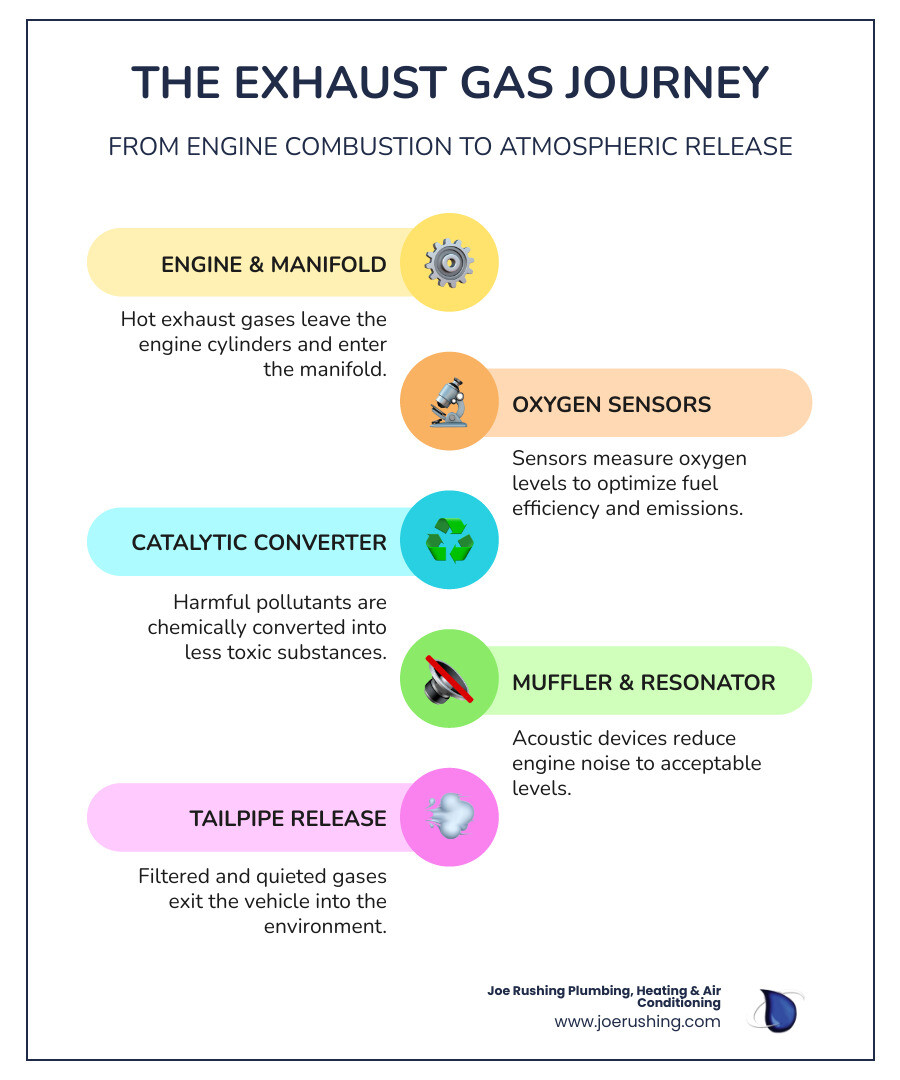
Let’s trace the journey of exhaust gases:
- Exhaust Manifold: This is where it all begins. The exhaust manifold collects the hot, spent gases from each cylinder of the engine and funnels them into a single pipe. A crack here can lead to loud ticking noises and exhaust leaks.
- Oxygen Sensors: Positioned before and after the catalytic converter, these sensors monitor the oxygen levels in the exhaust stream. They send data to your vehicle’s computer, helping it adjust the air-fuel mixture for optimal combustion and reduced emissions.
- Catalytic Converter: This is a powerhouse for emission control. It converts harmful pollutants into less toxic substances.
- Exhaust Pipes: These tubes connect all the components, guiding the gases away from the engine and out of the vehicle. They are crucial for ensuring a smooth flow of exhaust.
- Muffler: Designed to reduce engine noise, the muffler uses a series of baffles and chambers to cancel out sound waves. A failing muffler can make your car sound significantly louder.
- Resonator: Often located before the muffler, the resonator further refines the exhaust note, eliminating certain sound frequencies to create a more pleasant tone.
- Flex Pipes: These flexible sections in the exhaust system absorb vibrations from the engine, helping protect the exhaust pipes and reduce noise.
- Tailpipe: The final section of the exhaust system, through which the treated gases exit the vehicle.
- Brackets, Clamps, and Hardware: These seemingly small parts are essential for holding the entire system securely in place, preventing rattles and ensuring proper alignment.
The exhaust system is mounted to the bottom of your vehicle, making it susceptible to damage from road conditions, potholes, and debris. Its emission control components, particularly the catalytic converter and oxygen sensors, are vital for air quality. They help your vehicle meet environmental standards and pass required inspections. Without a properly functioning exhaust system, your vehicle would not only be excessively noisy but also a significant polluter.
Furthermore, your exhaust system directly impacts your vehicle’s performance and fuel economy. A well-designed system minimizes backpressure, allowing exhaust gases to exit efficiently, which can boost horsepower and improve overall engine performance. Conversely, a clogged or damaged exhaust system creates excessive backpressure, hindering engine output and reducing fuel efficiency. Ignoring muffler problems can diminish vehicle efficiency and lead to serious engine issues and high repair costs. For a deeper understanding of exhaust pipes in Lubbock, TX, you can explore resources like Exhaust pipe lubbock tx.
Just as your car relies on a clear path to safely move exhaust gases away from passengers, your home relies on properly designed and maintained furnace and water heater venting to carry combustion byproducts outside. Clear, unobstructed vent pipes and flues are essential to preventing dangerous gases from entering your living spaces.
What defines the best exhaust pipe in Lubbock, TX materials-wise?
When we talk about the best exhaust pipe in lubbock, tx from a materials perspective, we’re primarily looking at durability and corrosion resistance. Given the varied weather conditions and road debris exposure in West Texas over the years, choosing the right material can significantly extend the life of your exhaust system.
The two most common materials for exhaust pipes are:
- Aluminized Steel: This is a steel pipe coated with aluminum, offering a good balance of corrosion resistance and value. It performs well in many conditions and is a popular choice for standard replacement systems due to its lasting appearance.
- Stainless Steel: For superior durability and corrosion resistance, especially against rust, stainless steel is a top choice. It typically offers a longer lifespan, making it a wise investment for those who plan to keep their vehicle for many years or who drive in harsher conditions.
When seeking the best exhaust pipe in lubbock, tx, pay attention to the materials used for any exhaust work. Choosing quality materials and making sure joints, hangers, and supports are properly installed helps your system last longer and perform better.
Understanding the catalytic converter’s critical role
The catalytic converter is one of the most important components of your vehicle’s exhaust system, especially when it comes to environmental protection. Its primary function is to transform harmful gases produced by your engine into less toxic substances before they are released into the atmosphere. Specifically, it helps convert carbon monoxide, nitrogen oxides, and unburnt hydrocarbons into oxygen, nitrogen, carbon dioxide, and water vapor. This process is crucial for reducing air pollution and helping your vehicle comply with emissions standards.
Given its vital role, a failing catalytic converter is a serious issue that needs prompt attention. Replacing the catalytic converter is often the best decision, as it is crucial for reducing air pollution within your exhaust system, and attempting repairs often isn’t cost-effective or reliable in the long run.
So, how do you know if this crucial component is failing? Here are the key warning signs:
- Check Engine Light: This is one of the most common indicators. The catalytic converter’s sensors can trigger the light if they detect abnormal levels of pollutants.
- Drop in Fuel Economy: If your engine isn’t processing gases efficiently, it can lead to increased fuel consumption.
- Rattling While Idle: A distinct rattling sound, especially when your car is idling, can indicate that the internal honeycomb structure of the catalytic converter has broken apart.
- Sulfur/Rotten Egg Smell: This pungent odor is a classic sign that the catalytic converter is not effectively processing sulfur in the exhaust gases.
- Engine Stalling or Reduced Performance: A severely clogged catalytic converter can restrict exhaust flow, suffocating the engine and leading to stalling or a noticeable loss of power.
- Glowing Catalytic Converter: In extreme cases, an overheating catalytic converter might glow red hot, which is a dangerous sign of severe blockage or malfunction.
- Failed Emissions Test: This is a definitive indicator that your catalytic converter isn’t doing its job and your vehicle is emitting excessive pollutants.
If you notice any of these symptoms, it is important to have your vehicle inspected promptly. Addressing a failing catalytic converter helps your vehicle remain low-emission and perform reliably, and it is a reminder of how crucial properly functioning exhaust and venting are in every combustion system, including the heating equipment in your Lubbock or Levelland home.
Stock, Custom, or Performance? Choosing Your Next Exhaust
When it comes to replacing or upgrading your vehicle’s exhaust system, you generally have three main routes: standard replacement, custom, or performance. Each option offers different benefits depending on your priorities, whether they are quiet operation, a unique sound, or improving power.
Standard Replacement Systems:
These systems are designed to match your vehicle’s original equipment manufacturer (OEM) specifications. They prioritize quiet operation, emissions compliance, and reliability. If your goal is simply to replace a worn-out component with something that functions like the original, a standard replacement is the way to go. They are often made with aluminized steel and are built to provide solid, no-frills service.
Custom Exhaust Systems:
For those who want something a bit more unique, a custom exhaust system allows for custom sound and, in some cases, performance tuning. This involves fabricating specific sections or the entire exhaust to meet individual preferences, whether that’s a deeper rumble or a more refined tone. Custom exhaust setups can be designed for a wide range of vehicles, from everyday cars and trucks to classic automobiles and specialty equipment. Components like X-pipes and H-pipes can be used to alter exhaust flow and sound characteristics. If appearance as well as function is important, a custom exhaust can be designed to look as good as it sounds.
Performance Exhaust Systems:
If boosting horsepower, increasing torque, and achieving a more powerful sound are your main objectives, a performance exhaust system is what you’re looking for. These systems are engineered to optimize exhaust flow, reducing backpressure and allowing the engine to breathe more freely. Common types include:
- Cat-back systems: Replace everything from the catalytic converter back to the tailpipe. They are a popular choice for improving sound and achieving moderate performance gains.
- Axle-back systems: Replace only the muffler and tailpipe sections, primarily changing the exhaust note.
- Headers: Performance headers are designed to optimize exhaust flow directly out of your engine, often featuring larger ports, larger tubing, and smoother bends than factory manifolds.
Upgrading to a performance-oriented exhaust is one way drivers aim to gain a stronger exhaust note and improved responsiveness. In West Texas, where many residents rely on trucks and SUVs, a carefully chosen system can complement towing, commuting, or recreational driving.
Here’s a quick comparison to help you decide:
| Criteria | Standard Replacement System | Custom Exhaust System | Performance Exhaust System |
|---|---|---|---|
| Performance | OEM, no significant change | Can offer moderate gains, depending on design | Can provide noticeable gains in horsepower and torque |
| Sound | Quiet, factory tone | Custom sound, from mild to aggressive | Typically louder, more aggressive exhaust note |
| Appearance | Stock look | Can be visually improved (for example, polished tips) | Often features larger, more aggressive tips and polished components |
| Purpose | Repair, maintain OEM specs | Personalization, unique sound, specific vehicle needs | Improve engine output, sporty sound, aesthetic upgrade |
The benefits of a dual exhaust setup
For many vehicle enthusiasts, a dual exhaust system isn’t just about aesthetics; it can bring real-world benefits. A dual exhaust system features two separate pipes to expel exhaust gases, rather than a single one. This design is often used to improve engine performance, support better gas mileage, increase horsepower, and even help the engine run cooler.
By providing two distinct pathways for exhaust gases, a dual system can reduce backpressure more effectively than a single pipe. This allows the engine to “breathe” better, meaning spent gases exit the cylinders more quickly and efficiently. The result is often a noticeable improvement in engine performance, with increased horsepower and torque in vehicles designed to take advantage of such a setup. Some drivers also report improved gas mileage, as the engine operates more efficiently.
Beyond performance, a dual exhaust system often provides a deeper, more aggressive exhaust note that many find appealing, and it can give your vehicle a more symmetrical and sporty appearance.
While dual exhaust may be an upgrade for your vehicle, a similar principle applies in your home: giving combustion appliances a clear, properly sized vent or flue path helps them operate efficiently and safely. Making sure your furnace, water heater, and other gas appliances in your Lubbock or Levelland home are vented correctly is just as important as keeping your car’s exhaust in good condition.
How to Find the Best Exhaust Pipe in Lubbock, TX: A Service Checklist
Finding the best exhaust pipe in lubbock, tx isn’t just about the pipe itself; it’s about finding knowledgeable professionals to look after the systems that protect your family from exhaust gases. Just as you want trusted experts caring for your home’s plumbing, heating, and cooling, your vehicle and your home both deserve careful attention when it comes to anything involving combustion and venting.
Here’s a simple checklist you can keep in mind when you are thinking about exhaust safety and maintenance:
-
Look for expertise with exhaust and venting systems: Whether it is the exhaust plumbing under your car or the flue from your furnace, you want someone who understands how gases should safely move out of your living or driving space.
-
Ask about materials and parts: For vehicle exhaust, that means understanding options like aluminized or stainless steel. For your home, that means using appropriate vent pipe materials and fittings that are designed for furnaces, water heaters, and other gas appliances.
-
Confirm that safety is the top priority: Any work that involves exhaust should include checks for proper clearances, secure hangers or supports, and a clear path for gases to exit outdoors.
-
Make sure you get clear explanations: You should feel comfortable asking questions about your exhaust or venting, and you should get straightforward answers about what is needed and why.
Proactive maintenance tips for your exhaust
Maintaining your exhaust system isn’t just about reacting to problems; it’s about being proactive. Regular check-ups can save you from unexpected breakdowns and reduce the risk of exposure to exhaust gases.
Here are some recommended maintenance practices:
- Annual Inspections: Have your vehicle’s exhaust system inspected about once a year by a trusted mechanic, and schedule routine inspections for your home’s furnace and water heater venting with a qualified HVAC professional. They can spot potential issues like small cracks, loose hangers, or early signs of rust before they become major problems.
- Check for Rust or Damage: Periodically, take a look under your vehicle yourself. While you might not be an expert, you can often spot obvious signs of trouble like excessive rust, dents, or parts that appear to be hanging lower than they should. Around your home, look for staining, rust, or loose sections on visible vent pipes.
- Listen for New Sounds: Become familiar with the normal sounds of your vehicle and your HVAC system. If you suddenly hear new rattles, hisses, or roars, don’t ignore them. Addressing these sounds early can prevent a minor issue from escalating.
- Address Issues Promptly: If you suspect an issue with exhaust or venting, don’t delay. Scheduling repairs promptly with skilled technicians can help prevent further damage to other components and avoid higher repair costs in the future. For urgent vehicle-related needs, knowing about resources like a 24-hour exhaust pipe lubbock guide can be invaluable, and for home systems, you can rely on Joe Rushing Plumbing, Heating & Air Conditioning when you need prompt attention.
Conclusion: Drive with Confidence and Peace of Mind
Navigating anything related to combustion and exhaust—whether it is your vehicle or your home’s heating equipment—can feel overwhelming. By understanding the signs of trouble, knowing the components involved, and being equipped with a simple checklist for safety and maintenance, you are better prepared to make informed decisions for your vehicle and your home in Lubbock and Levelland, TX. The best exhaust pipe in lubbock, tx isn’t just a product; it is part of an overall approach that includes quality materials, expert installation, and reliable service that helps protect your family from harmful gases.
A healthy exhaust system is vital for both your car’s longevity and your well-being. From preventing dangerous carbon monoxide leaks to supporting fuel economy and engine performance, its role cannot be overstated. The same is true for the exhaust and venting connected to your furnace and other gas appliances. By choosing experienced professionals who prioritize safety, quality, and clear communication, you can drive and live with confidence and peace of mind, knowing your systems are in top condition.
Just as your car’s exhaust pipes are crucial for safe operation, so are your home’s furnace exhaust pipes. These pipes, often called flues or vents, safely expel combustion byproducts like carbon monoxide from your heating system to the outside. A damaged or improperly maintained furnace exhaust pipe can pose serious health risks to your family, similar to a leaking car exhaust. Understanding the importance of these systems in both your vehicle and your home is key to ensuring safety.
If you are interested in learning more about keeping your home’s heating system safe, you might find our article on furnace exhaust pipe repair in Lubbock helpful. For all your home’s heating system needs, our experts at Joe Rushing Plumbing, Heating & Air Conditioning are here to help ensure your living spaces are safe and comfortable. Explore our comprehensive heating services today to schedule your next service appointment.