
Why Your Furnace Igniter Matters on Cold Lubbock Nights
Furnace igniter repair in lubbock tx becomes urgent when your heating system clicks but won’t light during a West Texas winter. The igniter is the small component that starts the combustion process in your gas furnace. When it fails, your entire system shuts down. Understanding the warning signs can prevent a minor issue from becoming an emergency.
Quick Answer: Steps for Furnace Igniter Repair
- Check your thermostat – Verify it’s set to “heat” and at least 3-5 degrees above room temperature.
- Inspect the air filter – A dirty filter can cause the igniter to overheat and crack.
- Listen for clicking sounds – If your furnace clicks but doesn’t ignite, the igniter may be faulty.
- Look for cold air – If the blower runs but air stays cold, the igniter isn’t lighting the gas.
- Call a licensed technician – Professional diagnosis ensures safety and prevents gas leaks or carbon monoxide risks.
For reliable heating solutions, explore our Heating Services, or if you need immediate assistance, schedule a furnace repair appointment with our experienced team.
A failing igniter isn’t just an inconvenience; it can be dangerous. It might allow gas to build up, creating a delayed ignition that sounds like a small explosion. Other times, a cracked igniter won’t glow hot enough to light the gas, leaving your system cycling on and off without producing heat. Igniters are among the most frequently replaced parts in modern gas furnaces, especially in systems over 10 years old.
I’m Ronda Rushing Brown of Joe Rushing Plumbing, Heating & Air Conditioning. Our family business has provided furnace igniter repair in lubbock tx for decades, and I’m here to help you understand when your igniter needs attention.
Is Your Furnace Igniter Failing? Key Signs to Watch For
On a cold Lubbock night, you expect warmth when you turn up the thermostat. Instead, your furnace just clicks, or the air from your vents stays cold. This frustrating scenario is often your furnace’s way of telling you the igniter needs attention. Recognizing these signals can help you get ahead of a complete breakdown.
What are the common signs of a failing igniter?
When an igniter starts to fail, your furnace provides clear warnings.
- Clicks But Won’t Ignite: This is the classic symptom. You’ll hear the furnace try to start, but if the igniter can’t get hot enough to light the gas, the cycle stops.
- Furnace Blows Cold Air: The blower fan may run, but if the igniter isn’t lighting the burners, you’re just circulating unheated air. Our guide on Furnace Not Heating Lubbock TX can help you troubleshoot further.
- Short Cycling: The furnace turns on, runs for a few seconds, then shuts off. This loop occurs when the igniter fails to light the burners consistently, triggering a safety shutdown.
- No Heat at All: A completely dead igniter prevents the gas valve from opening as a safety precaution, leaving your furnace unable to produce any warmth.
- Error Codes: Modern furnaces often display error codes (blinking lights or a digital display) that point to ignition problems. Check your manual for codes related to “ignition failure” or “no flame detected.”
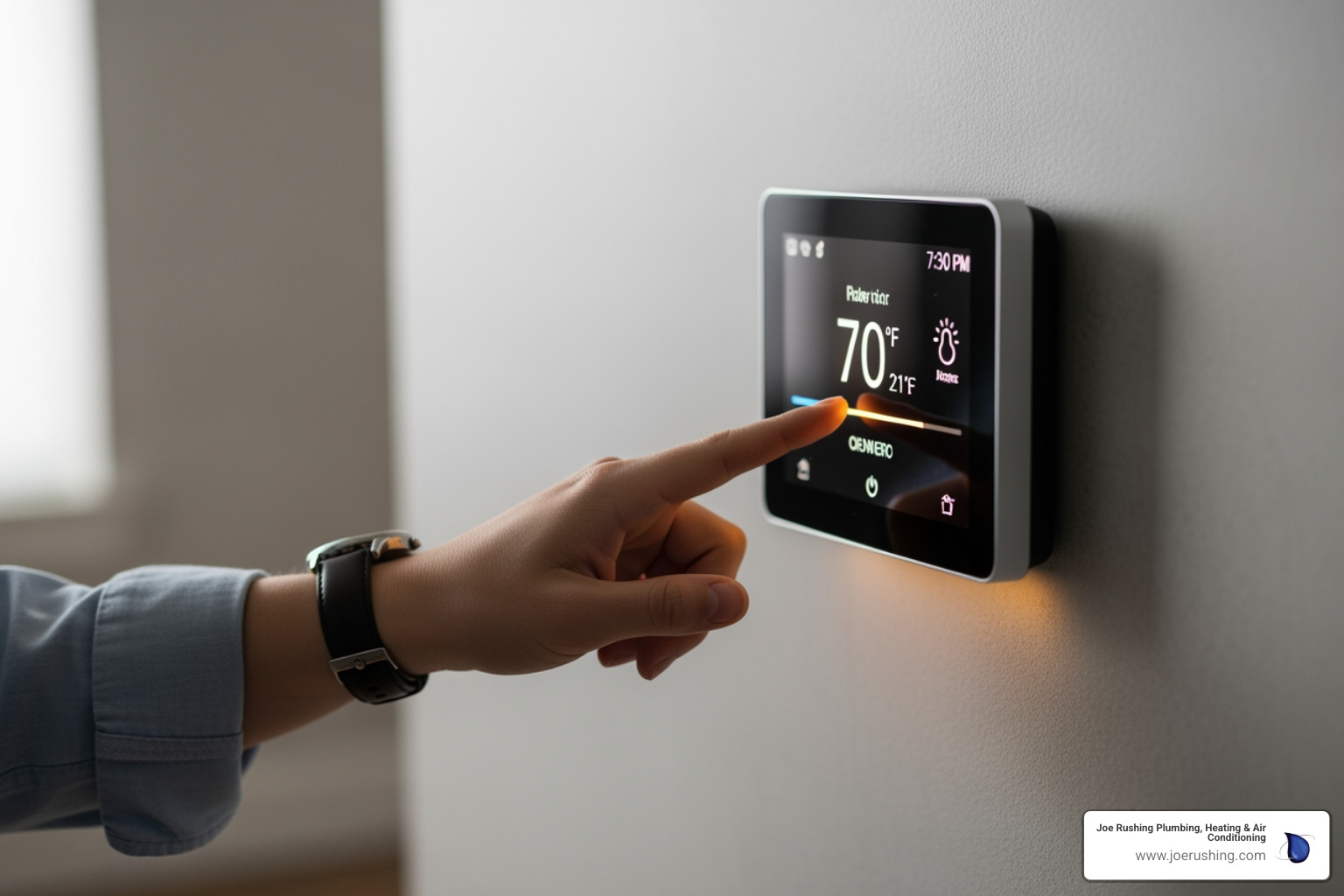
Before assuming the worst, check that your thermostat is set to “heat” and the furnace has power. Sometimes, a major furnace igniter repair in lubbock tx situation is just a tripped breaker.
What should I do if I suspect my furnace igniter is failing?
If you see these signs, take these safe steps before calling a professional.
- Turn off power to the furnace. Use the shut-off switch near the unit or the breaker in your electrical panel. This is a critical safety step.
- Check your air filter. A clogged filter restricts airflow, causing the furnace to overheat. This excess heat can crack the igniter. If the filter is dirty, replace it.
- Look for visible damage (if accessible). The igniter is a small ceramic part. Look for cracks or breaks, but do not touch it—igniters are extremely fragile.
- Write down any error codes. These codes give our technicians a head start on diagnosing the issue, helping us arrive prepared.
These checks are safe for homeowners, but the actual repair should always be handled by a licensed professional due to the risks of working with gas and electricity.
Understanding Your Furnace Igniter: How It Works and Why It Fails
Inside your furnace, a small but mighty component called the igniter works hard every time your thermostat calls for heat. Understanding how it works—and why it fails—can help you spot problems early.
How does a furnace igniter work, and why is it crucial for heating?
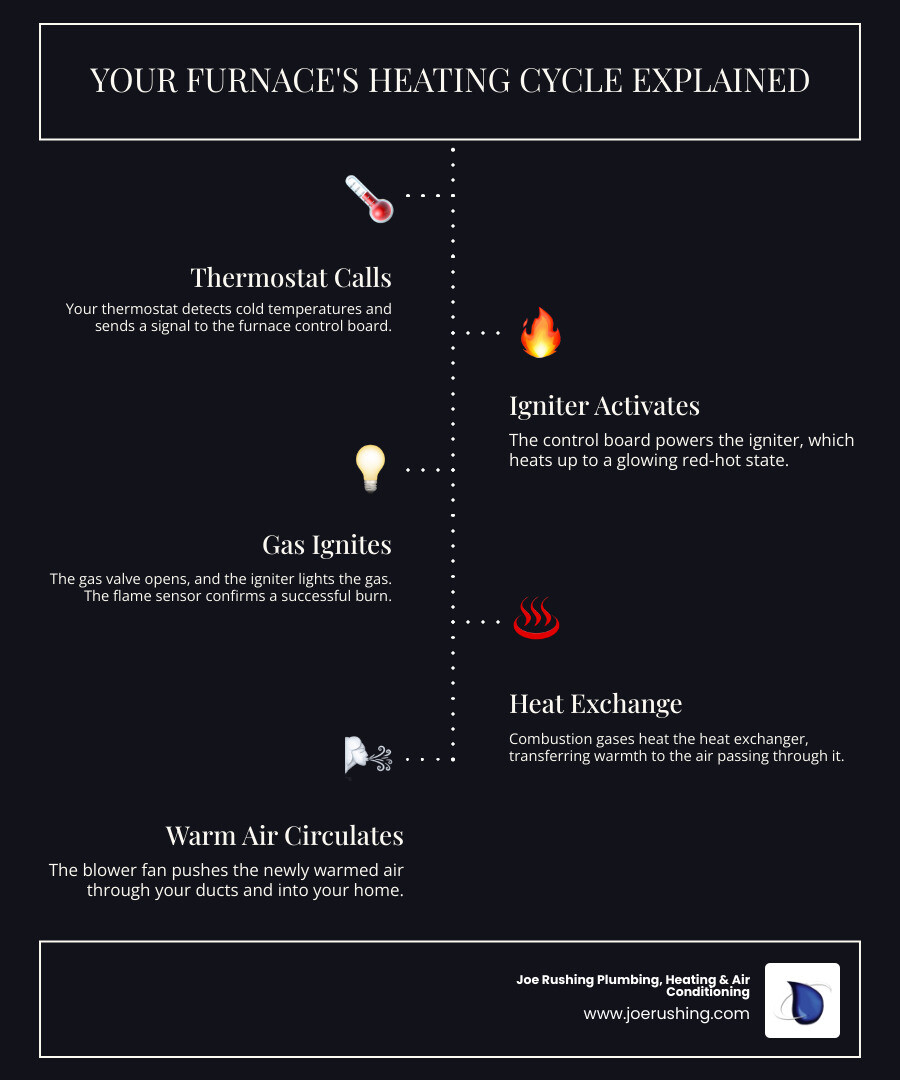
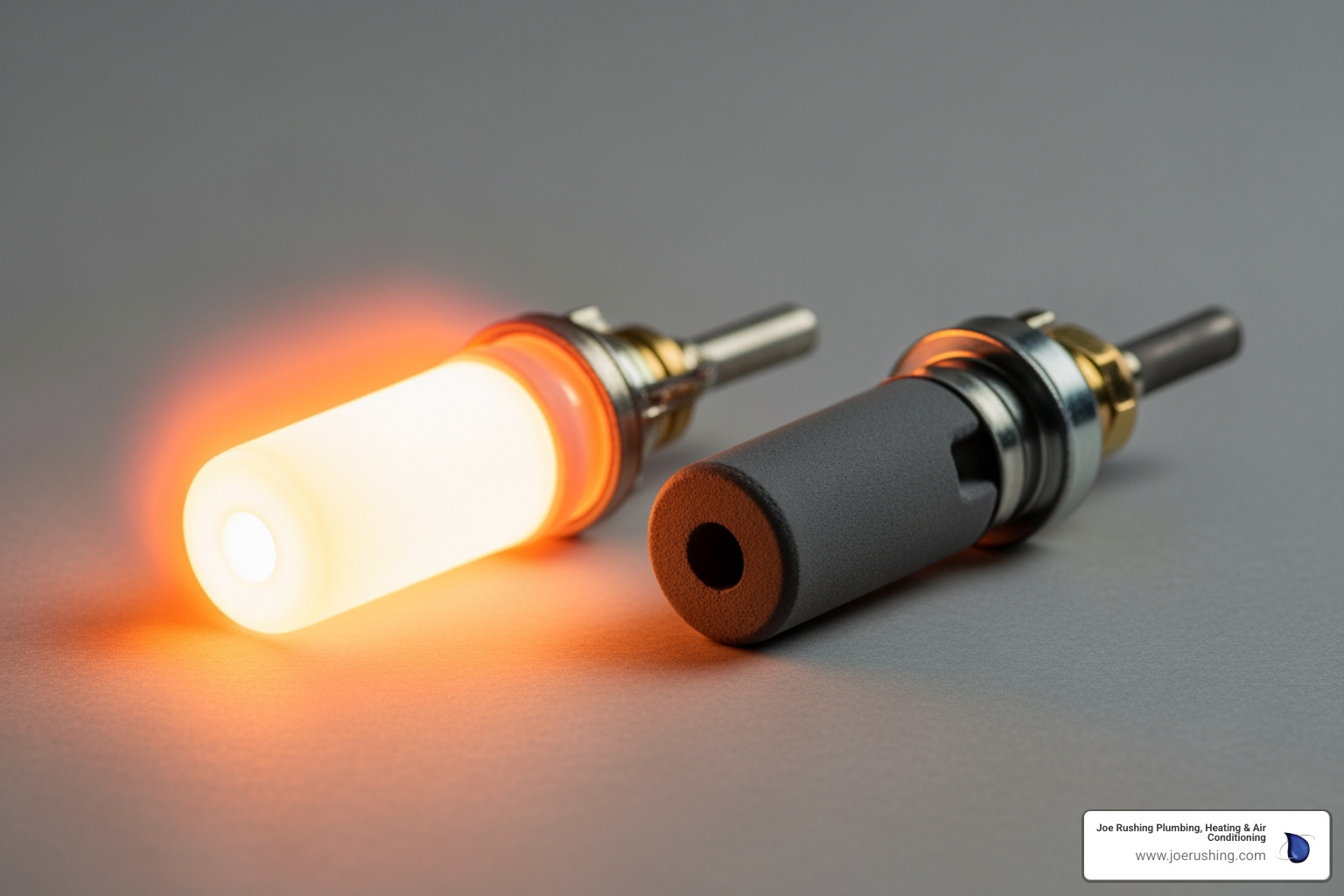
Most modern furnaces use a Hot Surface Igniter (HSI), which is far more efficient than old-fashioned pilot lights. When your thermostat calls for heat, the furnace control board sends electricity to the HSI. It quickly heats up to around 2,500°F, glowing red-hot.
Once the HSI is hot, the gas valve opens, and the gas ignites instantly upon contact. A flame sensor then confirms the flame is lit, and the blower circulates warm air through your home. This sequence happens every time your furnace runs. Without a working igniter, the entire heating process stops before it can begin. According to the U.S. Department of Energy, maintaining these components is key to efficiency and longevity.
What are the potential causes of a faulty furnace igniter?
Igniters are durable but don’t last forever. Common causes of failure include:
- Natural Lifespan: The constant cycle of extreme heating and cooling eventually wears the igniter out.
- Dirty Air Filters: Restricted airflow from a clogged filter causes the furnace to overheat, putting immense stress on the igniter and leading to premature cracks or failure.
- Handling Oils: The material is sensitive to skin oils. Touching an igniter with bare hands can create a weak spot that causes it to fail.
- Electrical Surges: Power fluctuations can damage the igniter’s delicate electrical components.
- Physical Cracks: Repeated thermal stress can cause small cracks to form over time.
What is the role of the flame sensor in relation to the igniter?
The igniter and flame sensor work as a team. The igniter starts the flame, and the flame sensor confirms it is lit. This is a critical safety check. The sensor is a thin metal rod that detects the flame’s electrical properties.
If the igniter fails to light the gas, the flame sensor detects no flame and signals the control board to shut the system down. This prevents unburned gas from accumulating in your furnace.
Sometimes, the problem isn’t the igniter but a dirty flame sensor. Carbon buildup can insulate the sensor, preventing it from detecting a perfectly good flame. The furnace will still shut down as a safety precaution. This is why a professional diagnosis for furnace igniter repair in lubbock tx is so important—it could be a simple sensor cleaning.
Your Guide to Furnace Igniter Repair in Lubbock TX
When your furnace igniter fails, you might be tempted to try a DIY repair. However, furnace igniter repair in lubbock tx is a job best left to licensed professionals for safety and performance reasons.
Can a homeowner attempt to repair a furnace igniter themselves?
Unless you are a certified HVAC technician, replacing a furnace igniter is risky. Modern furnaces are complex systems with intricate electrical wiring, gas connections, and safety controls. A small mistake, like using the wrong part or incorrect wiring, can lead to further damage or serious safety hazards.
Furthermore, most manufacturers’ warranties are voided if repairs are performed by uncertified individuals. A DIY repair could leave you paying out-of-pocket for more expensive failures down the line. For reliable HVAC Services that protect your investment, professional help is the smart choice.
What are the safety risks associated with a malfunctioning furnace igniter?
A faulty igniter poses significant safety risks that every homeowner should take seriously.
- Unburned Gas Accumulation: If the igniter fails but the gas valve opens briefly, natural gas can collect in the combustion chamber. This can lead to a “delayed ignition”—a small explosion inside your furnace that can crack the heat exchanger and damage other components.
- Carbon Monoxide Risk: A weak or failing igniter can cause incomplete combustion, which produces carbon monoxide (CO). This odorless, colorless gas is extremely dangerous and can be life-threatening. Symptoms of CO poisoning mimic the flu (headaches, dizziness, nausea), making it hard to detect.
Professional diagnosis is essential for safety. As recommended by the U.S. Department of Energy, regular maintenance by a professional improves safety and catches these issues early. If you suspect an igniter problem, turn off your furnace and call a professional. Your safety is worth the peace of mind.
Preventing Igniter Problems and Finding Professional Help
The best way to deal with a furnace igniter problem is to prevent it. Proactive care can keep your heating system running smoothly through chilly Lubbock winters.
How can regular furnace maintenance help prevent igniter issues?
An annual furnace tune-up is like a wellness check for your heating system. As the U.S. Department of Energy notes, regular tune-ups reduce repair costs and improve comfort. During a maintenance visit, a technician will:
- Clean critical components: This includes the burners, flame sensor, and igniter, preventing performance issues caused by dust and carbon buildup.
- Check electrical connections: Tightening loose or corroded connections ensures the igniter receives consistent power, reducing stress on the component.
- Ensure proper airflow: By replacing dirty air filters and inspecting the blower, we prevent overheating—a primary cause of igniter failure.
Regular maintenance extends the life of all furnace components, not just the igniter. It also includes safety checks for gas leaks and carbon monoxide. This proactive approach helps prevent the need for furnace igniter repair in lubbock tx and keeps your system safe and efficient. For more tips, see our guide on Affordable Furnace Repair Lubbock TX Tips.
How do I find a qualified technician for furnace igniter repair in Lubbock TX?
When you need professional help, choosing the right technician is crucial. Look for a company that is:
- Licensed and Insured: This is a non-negotiable that protects you and your home.
- Well-Reviewed: Positive local reviews from other Lubbock homeowners indicate trustworthy, quality service.
- Experienced: A team familiar with various furnace brands can diagnose issues faster and more accurately.
- Committed to Standards: Our technicians follow ACCA’s ANSI-approved quality standards to ensure your system runs safely and efficiently.
A good technician will also communicate clearly, explaining the problem and your options without pressure. When you need reliable Furnace Repair in the Lubbock area, our team is ready to help.
Frequently Asked Questions about Furnace Igniters
Here are answers to common questions we hear from homeowners about furnace igniters.
Why does my furnace click on and off but never produce heat?
This classic symptom usually points to a failed igniter or a dirty flame sensor. The furnace control board tries to start the heating cycle (the clicking sound), but if the igniter doesn’t get hot enough or the flame sensor can’t detect a flame, the system shuts down for safety. This prevents unburned gas from building up. The furnace will repeat this failed attempt, causing the on-and-off clicking.
Can a dirty air filter really cause my igniter to break?
Yes, this is a very common cause of furnace igniter repair in lubbock tx. A clogged air filter restricts airflow, forcing the furnace to run hotter than it should. This excess heat puts extreme stress on the igniter, causing it to crack or fail prematurely. Regularly changing your air filter is a simple way to prevent this expensive repair.
What is the difference between a pilot light and an electronic igniter?
The main difference is efficiency and how they operate.
- Standing Pilot Light: Found in older furnaces, this is a small, constant flame that burns 24/7 to ignite the main burners when needed. It wastes gas and can be extinguished, requiring a manual relight.
- Electronic Igniter: Used in modern furnaces, this device (like a Hot Surface Igniter) only heats up to ignite the gas when the thermostat calls for heat. It’s more energy-efficient and generally safer because there is no constant open flame.
Your Next Steps for a Warm and Safe Home
Your furnace igniter is a small but essential component for keeping your Lubbock home warm and safe. When you notice warning signs like clicking without heat or cold air from your vents, your furnace’s safety systems are working to protect you by shutting down.
Safety should always be your first priority. Gas appliances require professional expertise, and attempting a DIY furnace igniter repair in lubbock tx is risky. The dangers of gas leaks, carbon monoxide, and voiding your warranty make professional service the only safe option.
At Joe Rushing Plumbing, Heating & Air Conditioning, we’ve served Lubbock families for decades. Our technicians will diagnose the issue accurately, explain it clearly, and get your heat back on safely and quickly. Whether it’s a cracked igniter, a dirty flame sensor, or another problem, we have the expertise to handle it.
Don’t wait for a failing igniter to become an emergency. For expert Heating Services in the Lubbock area, schedule an appointment with our trusted team today. We’re ready to ensure your furnace runs smoothly, keeping your family comfortable and giving you peace of mind.